Overview
The Hashemite Dynasty and the Ottoman Empire
The Hashemite dynasty is an ancient Arabian family, tracing its lineage back to Hashim, a member of the Quraysh tribe and great-grandfather of the Prophet Muhammad. In 1517, the Ottoman Empire conquered Egypt and claimed its associated territories in the Hijaz. Ottoman Sultan Selim I confirmed Barakat II, a member of the Hashemite dynasty, as the Sharif of Mecca, guardian of the holy places in the Hijaz, Mecca, and Medina. In 1908, Husayn bin ‘Ali al-Hashimi (commonly spelled ‘Hussein’ in English sources) took on the Sharifate.
The Hijaz was not particularly fertile land, and the region was subsidised by the Ottoman Government. Another significant source of revenue for Husayn bin ‘Ali was the annual Hajj to Mecca. However, the completion of the Hijaz railway in 1908 reduced the income that the Bedouin tribes could make from “protecting” pilgrims on their way to Mecca.
Archive items in this article



Prior to becoming the Sharif, Husayn had spent fifteen years (1893-1908) in Constantinople [Istanbul] at the invitation of Sultan ‘Abd al-Hamid II. In those years, the Ottoman Empire had been in political and economic decline. Seeking to prevent gains by any competing European imperialist powers (the so-called ‘Eastern Question’), Britain had been buttressing the Ottoman Empire. When the Young Turk Revolution erupted in 1908, Husayn felt at odds with the revolutionaries, as he viewed them as placing Arabs below other Ottoman citizens in the context of Turkish nationalism.
At that time, Britain would not support Husayn in any revolt against a power with which it had friendly relations. However, once the Ottoman Empire entered the First World War on the side of Germany and Austria-Hungary, Britain was happy to consider and implement schemes to weaken the Ottomans in Arabia. In the flux of war, British officials were keen to maintain affirmations of support for their allies, while also leaving themselves room to manoeuvre and extricate themselves from commitments if circumstances changed.
The Husayn-McMahon Correspondence
Between 1915-16, Husayn exchanged a series of letters with Sir Henry McMahon, the High Commissioner for Egypt. In drafting his letters, Husayn confided in and sought advice from his sons. Of the four of them – ‘Ali, ‘Abdullah, Faysal, and Zayd – ‘Abdullah was considered the strategist, and Faysal the most charismatic.

In one of his letters, Husayn sets out his thoughts on the territories to be included in a future independent Arab state. McMahon’s reply on 24 October 1915 has become infamous for its misleading ambiguity. Drafted in English, McMahon’s letter was translated into Arabic by Husayn Ruhi, secret agent and translator to Britain’s Oriental Secretary, Sir Ronald Storrs. McMahon’s English letter is deliberately vague, simultaneously committing to supporting Husayn’s proposed state boundaries, while also acknowledging that Britain can make no such promises without France’s consent. The ambiguity rests on a single absent comma, and was entirely lost in translation (Barr, A Line in the Sand, p. 26).

Designed to be amenable to different interpretations, the letter was intended to bring the Hashemite-led Arabs of the Hijaz into the war against the Ottomans. This also served British aims to blunt the Sultan’s call to jihad, which British officials were worried would be answered by Muslims across the British Empire, including those serving in the British armed forces.
By way of further enticement, Britain also provided gold to replace the Ottoman subsidies, and Faysal was tasked with distributing these funds to the Bedouin tribesmen. Faysal coordinated with T. E. Lawrence (commonly known as ‘Lawrence of Arabia’), who had been sent from the Arab Bureau in Cairo and who undertook intelligence work including drawing maps of the Hijaz. Starting in June 1916, they implemented guerrilla warfare tactics. Most notably, they attacked the Hijaz railway to cut supply lines to Ottoman forces stationed in the Hijaz. The Ottoman troops were forced to withdraw from most of the territory, but hung on in Medina until the end of the war. Faysal and Lawrence successfully took Aqaba with a surprise land attack, and from there pressed on to Damascus. On 8 March 1920, Faysal was proclaimed King of the new Arab Kingdom of Syria.

Sykes-Picot and After: The Hashemite legacy in the modern Middle East
However, while McMahon was corresponding with Husayn, British officials were also negotiating secretly with France to divide the Middle East, under the so-called Sykes-Picot Agreement. French imperialists had an intense sense of their “rights” in Syria, and saw the Hashemites (including Faysal) as British stooges. It was with British acquiescence that French forces evicted Faysal from Damascus in the Battle of Maysalun on 24 July 1920. As compensation, Britain installed him as King of Iraq in August 1921, following a referendum skewed to give him the appearance of popular support in Mesopotamia. Meanwhile, ‘Abdullah had occupied some territory east of the river Jordan and was installed as King of Transjordan Used in three contexts: the geographical region to the east of the River Jordan (literally ‘across the River Jordan’); a British protectorate (1921-46); an independent political entity (1946-49) now known as Jordan , an area carved out of the newly created British Mandate in Palestine. By these actions, British officials claimed to have upheld the earlier promises of the Husayn-McMahon correspondence.
Related Articles
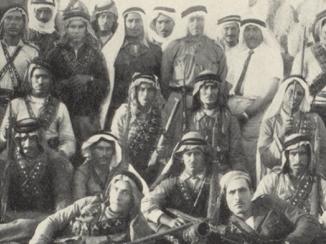


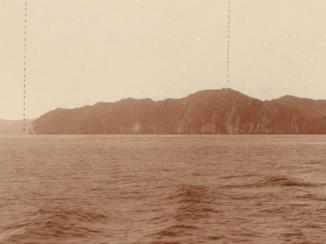

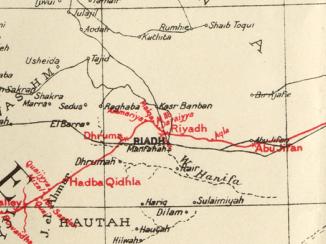
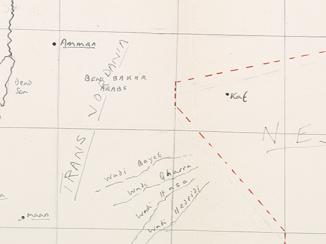
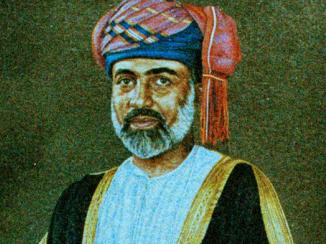


Husayn bin ‘Ali nevertheless felt betrayed by Britain in the Sykes-Picot Agreement and Balfour Declaration. He refused to ratify the Versailles Treaty, or to sign another treaty which would have accepted Syria and Palestine as French and British mandates respectively. By 1924, he was also facing a deteriorating military situation in his conflict with long-time rival ‘Abd al-‘Aziz bin ‘Abd al-Rahman Al Sa‘ud (commonly referred to as Ibn Sa‘ud) and his Ikhwan [ al-Ikhwān Islamist military force that contributed to Ibn Saud's rise to power. ]. He therefore abdicated in favour of his oldest son, ‘Ali. Without the protection of a larger power, the Hashemite Kingdom of Hijaz was short-lived. In December 1925, Britain declined to intervene when Ibn Sa‘ud conquered the Hijaz, deposing the Hashemites and absorbing the territory into his expanding Saudi state. Husayn lived out his last years in exile in Cyprus, only being allowed into Transjordan Used in three contexts: the geographical region to the east of the River Jordan (literally ‘across the River Jordan’); a British protectorate (1921-46); an independent political entity (1946-49) now known as Jordan to die.
Going the same way as the Hashemite Kingdoms of Syria and the Hijaz, the Hashemite Kingdom of Iraq was also overthrown in 1958 and its monarch King Faysal II was killed. Today, the dynasty survives only in Jordan, the last vestige of the Hashemite aspirations to independent statehood.