
![مناطق شبه الجزيرة العربية الخاضعة للحكم العثماني: بيان مفصل للرحلة الرسمية في بابل وأشور وبلاد الرافدين، في ١٨٨٦– ١٨٨٧ [<span dir="ltr">ظ٢٣</span>] (٧٢/٤٦)](https://iiif.qdl.qa/iiif/images/81055/vdc_100000001452.0x0002df/Mss Eur F112_384_0053.jp2/full/!1200,1200/0/default.jpg "مناطق شبه الجزيرة العربية الخاضعة للحكم العثماني: بيان مفصل للرحلة الرسمية في بابل وأشور وبلاد الرافدين، في ١٨٨٦– ١٨٨٧ [<span dir=\"ltr\">ظ٢٣</span>] (٧٢/٤٦)")
مناطق شبه الجزيرة العربية الخاضعة للحكم العثماني: بيان مفصل للرحلة الرسمية في بابل وأشور وبلاد الرافدين، في ١٨٨٦– ١٨٨٧ [ظ٢٣] (٧٢/٤٦)
محتويات السجل: مجلد واحد (٣٥ ورقة). يعود تاريخه إلى ١٨٨٨. اللغة أو اللغات المستخدمة: الإنجليزية والفارسية. النسخة الأصلية محفوظة في المكتبة البريطانية: أوراق خاصة وثائق جُمعت بصفة شخصية. وسجلات من مكتب الهند إدارة الحكومة البريطانية التي كانت الحكومة في الهند ترفع إليها تقاريرها بين عامي ١٨٥٨ و١٩٤٧، حيث خلِفت مجلس إدارة شركة الهند الشرقية. .
نسخ
النسخ مستحدث آليًا ومن المرجّح أن يحتوي على أخطاء.
\
30
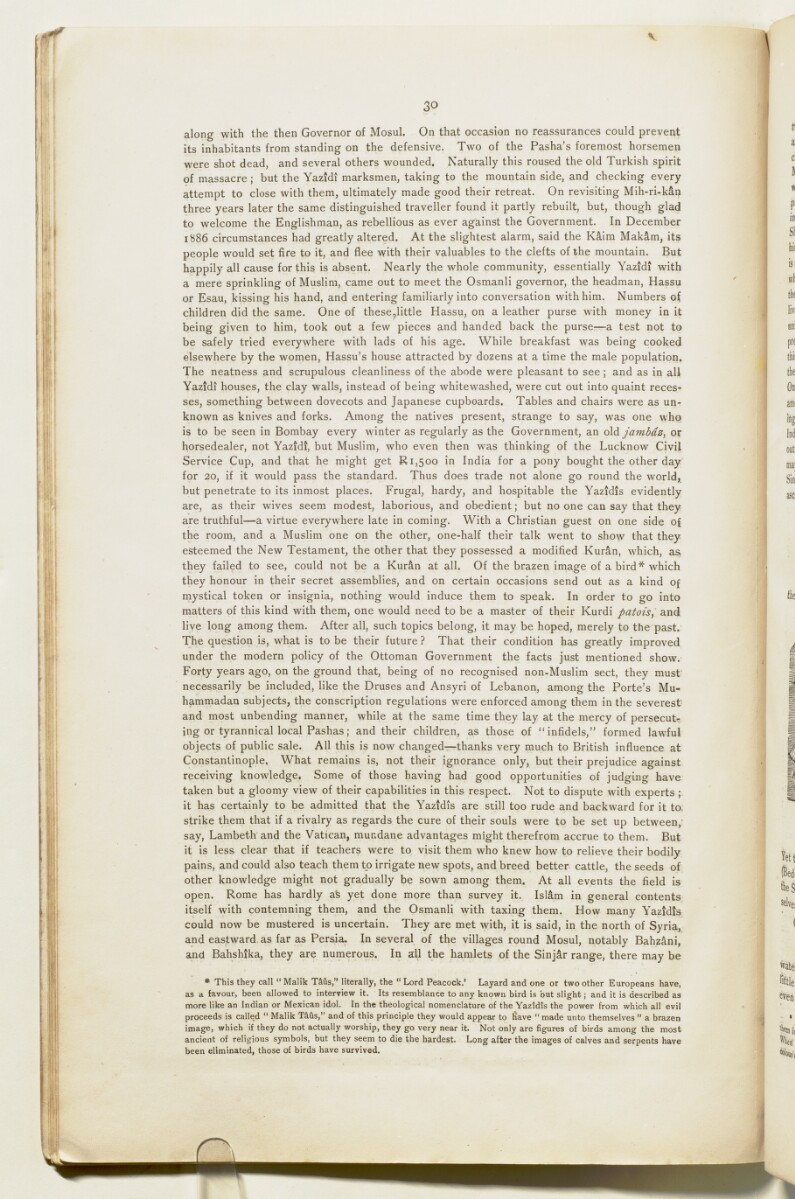
along with the then Governor of Mosul. On that occasion no reassurances could prevent
its inhabitants from standing on the defensive. Two of the Pasha's foremost horsemen
were shot dead, and several others wounded. Naturally this roused the old Turkish spirit
of massacre; but the Yazidi marksmen, taking to the mountain side, and checking every
attempt to close with them, ultimately made good their retreat. On revisiting Mih-ri-k&n
three years later the same distinguished traveller found it partly rebuilt, but, though glad
to welcome the Englishman, as rebellious as ever against the Government. In December
1886 circumstances had greatly altered. At the slightest alarm, said the Kaim Makam, its
people would set fire to it, and flee with their valuables to the clefts of the mountain. But
happily all cause for this is absent. Nearly the whole community, essentially Yazidi with
a mere sprinkling of Muslim, came out to meet the Osmanli governor, the headman, Hassu
or Esau, kissing his hand, and entering familiarly into conversation with him. Numbers of
children did the same. One of these 9 little Hassu, on a leather purse with money in it
being given to him, took out a few pieces and handed back the purse—a test not to
be safely tried everywhere with lads of his age. While breakfast was being cooked
elsewhere by the women, Hassu's house attracted by dozens at a time the male population.
The neatness and scrupulous cleanliness of the abode were pleasant to see; and as in all
Yazidi houses, the clay walls, instead of being whitewashed, were cut out into quaint reces
ses, something between dovecots and Japanese cupboards. Tables and chairs were as un
known as knives and forks. Among the natives present, strange to say, was one who
is to be seen in Bombay every winter as regularly as the Government, an old jambdz, or
horsedealer, not Yazidi, but Muslim, who even then was thinking of the Lucknow Civil
Service Cup, and that he might get R 1,500 in India for a pony bought the other day
for 20, if it would pass the standard. Thus does trade not alone go round the world,
but penetrate to its inmost places. Frugal, hardy, and hospitable the Yazidis evidently
are, as their wives seem modest, laborious, and obedient; but no one can say that they
are truthful—a virtue everywhere late in coming. With a Christian guest on one side o£
the room, and a Muslim one on the other, one-half their talk went to show that they
esteemed the New Testament, the other that they possessed a modified Kuran, which, a&
they failed to see, could not be a Kuran at all. Of the brazen image of a bird* which
they honour in their secret assemblies, and on certain occasions send out as a kind of
mystical token or insignia, nothing would induce them to speak. In order to go into
matters of this kind with them, one would need to be a master of their Kurdi patois, and
live long among them. After all, such topics belong, it may be hoped, merely to the past.
The question is, what is to be their future ? That their condition has greatly improved
under the modern policy of the Ottoman Government the facts just mentioned show.
Forty years ago, on the ground that, being of no recognised non-Muslim sect, they must
necessarily be included, like the Druses and Ansyri of Lebanon, among the Porte's Mu-
hammadan subjects, the conscription regulations were enforced among them in the severest
and most unbending manner, while at the same time they lay at the mercy of persecutr
ing or tyrannical local Pashas; and their children, as those of " infidels," formed lawful
objects of public sale. All this is now changed—thanks very much to British influence at
Constantinople, What remains is, not their ignorance only, but their prejudice against
receiving knowledge. Some of those having had good opportunities of judging have
taken but a gloomy view of their capabilities in this respect. Not to dispute with experts ;
it has certainly to be admitted that the Yazidis are still too rude and backward for it to
strike them that if a rivalry as regards the cure of their souls were to be set up between,
say, Lambeth and the Vatican, mundane advantages might therefrom accrue to them. But
it is less clear that if teachers were to visit them who knew how to relieve their bodily
pains, and could also teach them to irrigate new spots, and breed better cattle, the seeds of
other knowledge might not gradually be sown among them. At all events the field is
open. Rome has hardly afe yet done more than survey it. Islam in general contents
itself with contemning them, and the Osmanli with taxing them. How many Yazidis
could now be mustered is uncertain. They are met with, it is said, in the north of Syria,
and eastward as far as Persia, In several of the villages round Mosul, notably Bahzani,
and Bahshika, they are numerous. In all the hamlets of the Sinjir range, there may be
* This they call " Malik Taus," literally, the " Lord Peacock.' Layard and one or two other Europeans have,
as a favour, been allowed to interview it. Its resemblance to any known bird is but slight; and it is described as
more like an Indian or Mexican idol. In the theological nomenclature of the Yazidis the power from which all evil
proceeds is called " Malik T4us," and of this principle they would appear to have "made unto themselves " a brazen
image, which if they do not actually worship, they go very near it. Not only are figures of birds among the most
ancient of religious symbols, but they seem to die the hardest. Long after the images of calves and serpents have
been eliminated, those of birds have survived.
حول هذه المادة
- المحتوى
يعتبر هذا المجلد تقريرًا مطبوعًا عن الرحلة الرسمية الشتوية في (١٨٨٦-١٨٨٧) في بابل وآشور وبلاد الرافدين (أو ما يسمى حاليًا بالعراق)، والتي قام بها العقيد ويليام تويدى، قائد فيلق أركان حرب البنغال، والمقيم السياسي في مناطق شبه الجزيرة العربية الخاضعة للحكم العثماني (العراق)، هو والقنصل العام في بغداد. وكان هدف الزيارة أن يزور نائب قنصلية الموصل في الجزيرة الفراتية (شمال بلاد الرافدين)، وقنصل البصرة، بالإضافة إلى بعض الرعايا من الهنود المقيمين في مدينتي النجف وكربلاء، وهما مركزين يحج إليهما الشيعة. فضلاً عن هذا فإن الكاتب يعرفها بأنها فرصة لدراسة سكان وخصائص مناطق شبه الجزيرة العربية الخاضعة للحكم العثماني بصورة أكثر عمومية (ورقة ٧). نشرت الجالية البريطانية في بغداد هذا التقرير في الرابع والعشرين من شهر مايو سنة ١٨٨٧، كما نشرته مكتب ملاحظ المطبعة الحكومية في كلكتا في ١٨٨٨. وقدم المؤلف هذه النسخة إلى جورج كرزون (انظر التذييل في الورقة ٢ظ)
ويحتوى المجلد على جدول بالمحتويات (ورقة ٥)، وقائمة بالخرائط والرسومات التوضيحية (ورقة ٦)، وملاحظة عن الترجمة الحرفية للأسماء بالعربية والفارسية (ورقة ٦ظ) يحتوى المجلد على الأقسام التالية : (القسم الأول I) – السير في مناطق شبه الجزيرة العربية الخاضعة للحكم العثماني، (القسم II) – المواصلات، (القسم III) – المعدات، (القسم IV) – من دجلة إلى الفرات، (القسم V) – عبر الجزيرة، (القسم VI) – موضع البدو في شرق نهر دجلة، (القسم VII) – من الحويجة إلى كركوك، (القسم VIII) – من كركوك إلى السليمانية، (القسم IX) – من السليمانية إلى الموصل، (X) – من الموصل إلى تلال سنجار، ويحتوى على تفاصيل عن اليزيديين، (القسم XI) – من سنجار إلى دير الزور على ضفاف الفرات، (القسم XII) – الضفة اليمنى لنهر الفرات من دير الزور إلى الرمادى، (القسم XIII) – الشامية الجنوبية، (القسم XIV) – كربلاء والنجف، (القسم XV) – من بغداد إلى البصرة ذهابًا وإيابًا بالباخرة، ويحتوى على مجموعة تفاصيل عن ساحل الخليج العربي والمحمرة.
وتتضمن الرسومات التوضيحية ما يلي: "معسكر الإقامة في مناطق شبه الجزيرة العربية الخاضعة للحكم العثماني ١٨٨٦" (الورقة ٧ظ)؛ "عُدة البغال العاملة في مهام النقل والجر" (الورقة ٨)؛ " [ بالان ،سرج بالصرّة]" والبالان الفارسي" (الورقة ٩)؛ "راكب الجمل العربي: والسرج" "وحدوة الحصان عند العرب والفرس والتركمان والأفغان وآخرين" (الورقة ٩ظ)؛ ربط الحصان بوتد وحبل (الصادرة)" البايواند [حزمة]العربي والفارسي" (الورقة ١٠)؛ " الرشمة العربية: بما في ذلك (١) الرشمة المناسبة، أو كيس العلف: (٢) إزار [ إظار ] ، أو اللجام أو رباط رأس الحصان: و (٣) رسن [] (حرفيًا حبل) أو مكبح الحصان (الورقة ١٠ظ)؛ "والمخيم الطائر: سنجار إلى كربلاء (جميع الخيم الثلاث مصنوعة في بغداد)" (الورقة ٢٤).
تشمل الخرائط ما يلي: "خريطة مصاحبة لوصف المقيم البريطاني في رحلته الشتوية في مناطق شبه الجزيرة العربية الخاضعة للحكم العثماني ١٨٨٦-١٨٨٧" (ورقة ٤ظ)؛ "خريطة مبدئية للطريق من هت إلى تكريت مارًا بالجزء الأدنى من الجزيرة (ورقة ١٤ظ)؛ "إيالة الموصل العثمانية، ١٨٨٧"، "خريطة لمدينة الموصل (بعد الرائد ف. جونز) ١٨٥٢" (ورقة ١٨ظ)؛ "الطريق الأكثر استقامة (عبر الصحراء السورية) لراكبي الإبل فقط، بين بغداد والبحر المتوسط، كما سارت فيه الجمال العربية التابعة للقنصل الراحل" (الورقة ٢٧).
- الشكل والحيّز
- مجلد واحد (٣٥ ورقة)
- الترتيب
يحتوى المجلد على صفحة محتويات (الورقة ٥)، والتي تشير إلى أرقام الصفحات.
- الخصائص المادية
الحالة: ورقة رقم ٣٤ تتضمن حاشية (ربما بيد كرزون)، واُقتُطِعَ جُزءٌ من النص وأُزيل .
ترقيم الأوراق: يبدأ تسلسل الترقيم من الغلاف الأمامي وينتهي داخل الغلاف الخلفي؛ وهذه الأرقام مكتوبة بالقلم الرصاص ومحاطة بدائرة في أعلى يمين صفحة الوجه الجانب الأمامي للورقة أو لفرخٍ من الورق. كثيرًا ما يشار إليه اختصارًا بالحرف "و". من كل ورقة. ترقيم الصفحات: يتضمن المجلد أيضًا تسلسل ترقيم صفحات أصلي مطبوع.
- لغة الكتابة
- الإنجليزية والفارسية بالأحرف اللاتينية والعربية للاطّلاع على المعلومات الكاملة لهذا السجل
استخدام وإعادة نشر هذه المادة
- إعادة نشر هذه المادة
مناطق شبه الجزيرة العربية الخاضعة للحكم العثماني: بيان مفصل للرحلة الرسمية في بابل وأشور وبلاد الرافدين، في ١٨٨٦– ١٨٨٧ [ظ٢٣] (٧٢/٤٦)و المكتبة البريطانية: أوراق خاصة وسجلات من مكتب الهندو Mss Eur F112/384و مكتبة قطر الرقمية <https://www.qdl.qa/archive/81055/vdc_100023643185.0x000030> [تم الوصول إليها في ٥ يونيو ٢٠٢٦]
https://www.qdl.qa/العربية/archive/81055/vdc_100023643185.0x000030
يمكنك نسخ ولصق الفقرة التالية لتضمين الصورة في صفحة الويب الخاصة بك.
<meta charset="utf-8"><a href="https://www.qdl.qa/العربية/archive/81055/vdc_100023643185.0x000030">مناطق شبه الجزيرة العربية الخاضعة للحكم العثماني: بيان مفصل للرحلة الرسمية في بابل وأشور وبلاد الرافدين، في ١٨٨٦– ١٨٨٧ [<span dir="ltr">ظ٢٣</span>] (٧٢/٤٦)</a> <a href="https://www.qdl.qa/العربية/archive/81055/vdc_100023643185.0x000030"> <img src="https://iiif.qdl.qa/iiif/images/81055/vdc_100000001452.0x0002df/Mss Eur F112_384_0053.jp2/full/!280,240/0/default.jpg" alt="" /> </a>
هذا التسجيل IIIF له ملف ظاهر متوفر كما يلي. إذا كان لديك عارض متوافق للصور يمكنك سحب الأيقونة لتحميله.https://www.qdl.qa/العربية/iiif/81055/vdc_100000001452.0x0002df/manifestافتح في المتصفح العامافتح في عارض IIIF ميرادورطرق إضافية لاستخدام صور الأرشيف الرقمي
حقوق النسخ والتأليف: كيفية استخدام هذا المحتوى
- رقم الاستدعاء
- Mss Eur F112/384
- العنوان
- مناطق شبه الجزيرة العربية الخاضعة للحكم العثماني: بيان مفصل للرحلة الرسمية في بابل وأشور وبلاد الرافدين، في ١٨٨٦– ١٨٨٧
- الصفحات
- خلفي ،داخلي-خلفي ،ظ-i:و-i ،ظ٣٥:ظ٣٠ ،و٢٩:و٢ ،داخلي-أمامي ،أمامي
- المؤلف
- شركة الهند الشرقية ولجنة البرلمان البريطاني لشئون الهند ومكتب الهند وإدارات الحكومة البريطانية الأخرى
- شروط الاستخدام
- ترخيص حكومي عام