
![مناطق شبه الجزيرة العربية الخاضعة للحكم العثماني: بيان مفصل للرحلة الرسمية في بابل وأشور وبلاد الرافدين، في ١٨٨٦– ١٨٨٧ [<span dir="ltr">و٣١</span>] (٧٢/٥٩)](https://iiif.qdl.qa/iiif/images/81055/vdc_100000001452.0x0002df/Mss Eur F112_384_0068.jp2/full/!1200,1200/0/default.jpg "مناطق شبه الجزيرة العربية الخاضعة للحكم العثماني: بيان مفصل للرحلة الرسمية في بابل وأشور وبلاد الرافدين، في ١٨٨٦– ١٨٨٧ [<span dir=\"ltr\">و٣١</span>] (٧٢/٥٩)")
مناطق شبه الجزيرة العربية الخاضعة للحكم العثماني: بيان مفصل للرحلة الرسمية في بابل وأشور وبلاد الرافدين، في ١٨٨٦– ١٨٨٧ [و٣١] (٧٢/٥٩)
محتويات السجل: مجلد واحد (٣٥ ورقة). يعود تاريخه إلى ١٨٨٨. اللغة أو اللغات المستخدمة: الإنجليزية والفارسية. النسخة الأصلية محفوظة في المكتبة البريطانية: أوراق خاصة وثائق جُمعت بصفة شخصية. وسجلات من مكتب الهند إدارة الحكومة البريطانية التي كانت الحكومة في الهند ترفع إليها تقاريرها بين عامي ١٨٥٨ و١٩٤٧، حيث خلِفت مجلس إدارة شركة الهند الشرقية. .
نسخ
النسخ مستحدث آليًا ومن المرجّح أن يحتوي على أخطاء.
43
the
ft it
i
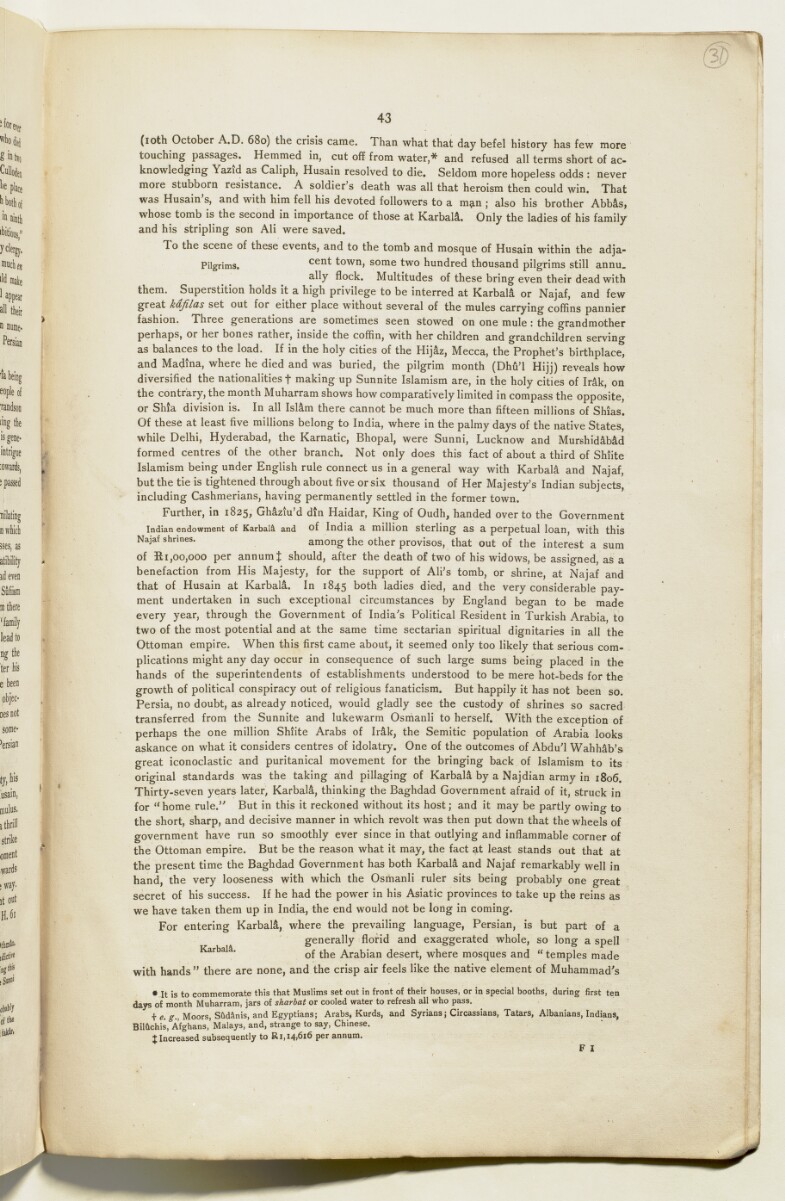
(10th October A.D. 680) the crisis came. Than what that day befel history has few more
touching passages. Hemmed in, cut off from water,* and refused all terms short of ac
knowledging Yazid as Caliph, Husain resolved to die. Seldom more hopeless odds : never
more stubborn resistance. A soldier s death was all that heroism then could win. That
was Husain s, and with him fell his devoted followers to a m9,n ; also his brother Abb4s,
whose tomb is the second in importance of those at Karbala. Only the ladies of his family
and his stripling son Ali were saved.
T o the scene of these events, and to the tomb and mosque of Husain within the adja-
Pilgrims. cent town, some two hundred thousand pilgrims still annu.
ally flock. Multitudes of these bring even their dead with
them. Superstition holds it a high privilege to be interred at Karbal^ or Najaf, and few
great kufilcis set out for either place without several of the mules carrying coffins pannier
fashion. Three generations are sometimes seen stowed on one mule \ the grandmother
perhaps, or her bones rather, inside the coffin, with her children and grandchildren serving
as balances to the load. If in the holy cities of the Hijaz, Mecca, the Prophet's birthplace,
and Madina, where he died and was buried, the pilgrim month (Dhu'l Hijj) reveals how
diversified the nationalities f making up Sunnite Islamism are, in the holy cities of Irak, on
the contrary, the month Muharram shows how comparatively limited in compass the opposite,
or Shia division is. In all Islam there cannot be much more than fifteen millions of Shias.
Of these at least five millions belong to India, where in the palmy days of the native States,
while Delhi, Hyderabad, the Karnatic, Bhopal, were Sunni, Lucknow and Murshidab^d
formed centres of the other branch. Not only does this fact of about a third of Shiite
Islamism being under English rule connect us in a general way with Karbala and Najaf,
but the tie is tightened through about five or six thousand of Her Majesty's Indian subjects,
including Cashmerians, having permanently settled in the former town.
Further, in 1825, Gh&zm'd din Haidar, King of Oudh, handed over to the Government
Indian endowment of Karbal& and of India a million sterling as a perpetual loan, with this
Najaf shrines. among the other provisos, that out of the interest a sum
of Ei,00,000 per annum J should, after the death o£ two of his widows, be assigned, as a
benefaction from His Majesty, for the support of Ali's tomb, or shrine, at Najaf and
that of Husain at Karbald. In 1845 both ladies died, and the very considerable pay
ment undertaken in such exceptional circumstances by England began to be made
every year, through the Government of India's Political Resident in Turkish Arabia, to
two of the most potential and at the same time sectarian spiritual dignitaries in all the
Ottoman empire. When this first came about, it seemed only too likely that serious com
plications might any day occur in consequence of such large sums being placed in the
hands of the superintendents of establishments understood to be mere hot-beds for the
growth of political conspiracy out of religious fanaticism. But happily it has not been so.
Persia, no doubt, as already noticed, would gladly see the custody of shrines so sacred
transferred from the Sunnite and lukewarm Osmanli to herself. With the exception of
perhaps the one million Shiite Arabs of Irak, the Semitic population of Arabia looks
askance on what it considers centres of idolatry. One of the outcomes of Abdu'l Wahhab's
great iconoclastic and puritanical movement for the bringing back of Islamism to its
original standards was the taking and pillaging of Karbala by a Najdian army in 1806.
Thirty -seven years later, Karbala, thinking the Baghdad Government afraid of it, struck in
for " home rule." But in this it reckoned without its host; and it may be partly owing to
the short, sharp, and decisive manner in which revolt was then put down that the wheels of
government have run so smoothly ever since in that outlying and inflammable corner of
the Ottoman empire. But be the reason what it may, the fact at least stands out that at
the present time the Baghdad Government has both Karbala and Najaf remarkably well in
hand, the very looseness with which the Osmanli ruler sits being probably one great
secret of his success. If he had the power in his Asiatic provinces to take up the reins as
we have taken them up in India, the end would not be long in coming.
For entering Karbald, where the prevailing language, Persian, is but part of a
generally florid and exaggerated whole, so long a spell
Karbaia ' of the Arabian desert, where mosques and " temples made
with hands " there are none, and the crisp air feels like the native element of Muhammad's
• It is to commemorate this that Muslims set out in front of their houses, or in special booths, during first ten
days of month Muharram, jars of sharbat or cooled water to refresh all who pass.
•i-Moors, Sudanis, and Egyptians; Arahs^ Kurds, and Syrians; Circassians, Tatars, Albanians, Indians,
Biluchis, Afghans, Malays, and, strange to say, Chinese.
J Increased subsequently to R 1,14,616 per annum.
F I
حول هذه المادة
- المحتوى
يعتبر هذا المجلد تقريرًا مطبوعًا عن الرحلة الرسمية الشتوية في (١٨٨٦-١٨٨٧) في بابل وآشور وبلاد الرافدين (أو ما يسمى حاليًا بالعراق)، والتي قام بها العقيد ويليام تويدى، قائد فيلق أركان حرب البنغال، والمقيم السياسي في مناطق شبه الجزيرة العربية الخاضعة للحكم العثماني (العراق)، هو والقنصل العام في بغداد. وكان هدف الزيارة أن يزور نائب قنصلية الموصل في الجزيرة الفراتية (شمال بلاد الرافدين)، وقنصل البصرة، بالإضافة إلى بعض الرعايا من الهنود المقيمين في مدينتي النجف وكربلاء، وهما مركزين يحج إليهما الشيعة. فضلاً عن هذا فإن الكاتب يعرفها بأنها فرصة لدراسة سكان وخصائص مناطق شبه الجزيرة العربية الخاضعة للحكم العثماني بصورة أكثر عمومية (ورقة ٧). نشرت الجالية البريطانية في بغداد هذا التقرير في الرابع والعشرين من شهر مايو سنة ١٨٨٧، كما نشرته مكتب ملاحظ المطبعة الحكومية في كلكتا في ١٨٨٨. وقدم المؤلف هذه النسخة إلى جورج كرزون (انظر التذييل في الورقة ٢ظ)
ويحتوى المجلد على جدول بالمحتويات (ورقة ٥)، وقائمة بالخرائط والرسومات التوضيحية (ورقة ٦)، وملاحظة عن الترجمة الحرفية للأسماء بالعربية والفارسية (ورقة ٦ظ) يحتوى المجلد على الأقسام التالية : (القسم الأول I) – السير في مناطق شبه الجزيرة العربية الخاضعة للحكم العثماني، (القسم II) – المواصلات، (القسم III) – المعدات، (القسم IV) – من دجلة إلى الفرات، (القسم V) – عبر الجزيرة، (القسم VI) – موضع البدو في شرق نهر دجلة، (القسم VII) – من الحويجة إلى كركوك، (القسم VIII) – من كركوك إلى السليمانية، (القسم IX) – من السليمانية إلى الموصل، (X) – من الموصل إلى تلال سنجار، ويحتوى على تفاصيل عن اليزيديين، (القسم XI) – من سنجار إلى دير الزور على ضفاف الفرات، (القسم XII) – الضفة اليمنى لنهر الفرات من دير الزور إلى الرمادى، (القسم XIII) – الشامية الجنوبية، (القسم XIV) – كربلاء والنجف، (القسم XV) – من بغداد إلى البصرة ذهابًا وإيابًا بالباخرة، ويحتوى على مجموعة تفاصيل عن ساحل الخليج العربي والمحمرة.
وتتضمن الرسومات التوضيحية ما يلي: "معسكر الإقامة في مناطق شبه الجزيرة العربية الخاضعة للحكم العثماني ١٨٨٦" (الورقة ٧ظ)؛ "عُدة البغال العاملة في مهام النقل والجر" (الورقة ٨)؛ " [ بالان ،سرج بالصرّة]" والبالان الفارسي" (الورقة ٩)؛ "راكب الجمل العربي: والسرج" "وحدوة الحصان عند العرب والفرس والتركمان والأفغان وآخرين" (الورقة ٩ظ)؛ ربط الحصان بوتد وحبل (الصادرة)" البايواند [حزمة]العربي والفارسي" (الورقة ١٠)؛ " الرشمة العربية: بما في ذلك (١) الرشمة المناسبة، أو كيس العلف: (٢) إزار [ إظار ] ، أو اللجام أو رباط رأس الحصان: و (٣) رسن [] (حرفيًا حبل) أو مكبح الحصان (الورقة ١٠ظ)؛ "والمخيم الطائر: سنجار إلى كربلاء (جميع الخيم الثلاث مصنوعة في بغداد)" (الورقة ٢٤).
تشمل الخرائط ما يلي: "خريطة مصاحبة لوصف المقيم البريطاني في رحلته الشتوية في مناطق شبه الجزيرة العربية الخاضعة للحكم العثماني ١٨٨٦-١٨٨٧" (ورقة ٤ظ)؛ "خريطة مبدئية للطريق من هت إلى تكريت مارًا بالجزء الأدنى من الجزيرة (ورقة ١٤ظ)؛ "إيالة الموصل العثمانية، ١٨٨٧"، "خريطة لمدينة الموصل (بعد الرائد ف. جونز) ١٨٥٢" (ورقة ١٨ظ)؛ "الطريق الأكثر استقامة (عبر الصحراء السورية) لراكبي الإبل فقط، بين بغداد والبحر المتوسط، كما سارت فيه الجمال العربية التابعة للقنصل الراحل" (الورقة ٢٧).
- الشكل والحيّز
- مجلد واحد (٣٥ ورقة)
- الترتيب
يحتوى المجلد على صفحة محتويات (الورقة ٥)، والتي تشير إلى أرقام الصفحات.
- الخصائص المادية
الحالة: ورقة رقم ٣٤ تتضمن حاشية (ربما بيد كرزون)، واُقتُطِعَ جُزءٌ من النص وأُزيل .
ترقيم الأوراق: يبدأ تسلسل الترقيم من الغلاف الأمامي وينتهي داخل الغلاف الخلفي؛ وهذه الأرقام مكتوبة بالقلم الرصاص ومحاطة بدائرة في أعلى يمين صفحة الوجه الجانب الأمامي للورقة أو لفرخٍ من الورق. كثيرًا ما يشار إليه اختصارًا بالحرف "و". من كل ورقة. ترقيم الصفحات: يتضمن المجلد أيضًا تسلسل ترقيم صفحات أصلي مطبوع.
- لغة الكتابة
- الإنجليزية والفارسية بالأحرف اللاتينية والعربية للاطّلاع على المعلومات الكاملة لهذا السجل
استخدام وإعادة نشر هذه المادة
- إعادة نشر هذه المادة
مناطق شبه الجزيرة العربية الخاضعة للحكم العثماني: بيان مفصل للرحلة الرسمية في بابل وأشور وبلاد الرافدين، في ١٨٨٦– ١٨٨٧ [و٣١] (٧٢/٥٩)و المكتبة البريطانية: أوراق خاصة وسجلات من مكتب الهندو Mss Eur F112/384و مكتبة قطر الرقمية <https://www.qdl.qa/archive/81055/vdc_100023643185.0x00003d> [تم الوصول إليها في ٤ يونيو ٢٠٢٦]
https://www.qdl.qa/العربية/archive/81055/vdc_100023643185.0x00003d
يمكنك نسخ ولصق الفقرة التالية لتضمين الصورة في صفحة الويب الخاصة بك.
<meta charset="utf-8"><a href="https://www.qdl.qa/العربية/archive/81055/vdc_100023643185.0x00003d">مناطق شبه الجزيرة العربية الخاضعة للحكم العثماني: بيان مفصل للرحلة الرسمية في بابل وأشور وبلاد الرافدين، في ١٨٨٦– ١٨٨٧ [<span dir="ltr">و٣١</span>] (٧٢/٥٩)</a> <a href="https://www.qdl.qa/العربية/archive/81055/vdc_100023643185.0x00003d"> <img src="https://iiif.qdl.qa/iiif/images/81055/vdc_100000001452.0x0002df/Mss Eur F112_384_0068.jp2/full/!280,240/0/default.jpg" alt="" /> </a>
هذا التسجيل IIIF له ملف ظاهر متوفر كما يلي. إذا كان لديك عارض متوافق للصور يمكنك سحب الأيقونة لتحميله.https://www.qdl.qa/العربية/iiif/81055/vdc_100000001452.0x0002df/manifestافتح في المتصفح العامافتح في عارض IIIF ميرادورطرق إضافية لاستخدام صور الأرشيف الرقمي
حقوق النسخ والتأليف: كيفية استخدام هذا المحتوى
- رقم الاستدعاء
- Mss Eur F112/384
- العنوان
- مناطق شبه الجزيرة العربية الخاضعة للحكم العثماني: بيان مفصل للرحلة الرسمية في بابل وأشور وبلاد الرافدين، في ١٨٨٦– ١٨٨٧
- الصفحات
- خلفي ،داخلي-خلفي ،ظ-i:و-i ،ظ٣٥:ظ٣٠ ،و٢٩:و٢ ،داخلي-أمامي ،أمامي
- المؤلف
- شركة الهند الشرقية ولجنة البرلمان البريطاني لشئون الهند ومكتب الهند وإدارات الحكومة البريطانية الأخرى
- شروط الاستخدام
- ترخيص حكومي عام